Category: Web Development
This is the perfect way to cement your knowledge. Instead of just reading about tags, you are now going to use them to build a Portfolio Resume. This is the first thing a recruiter...
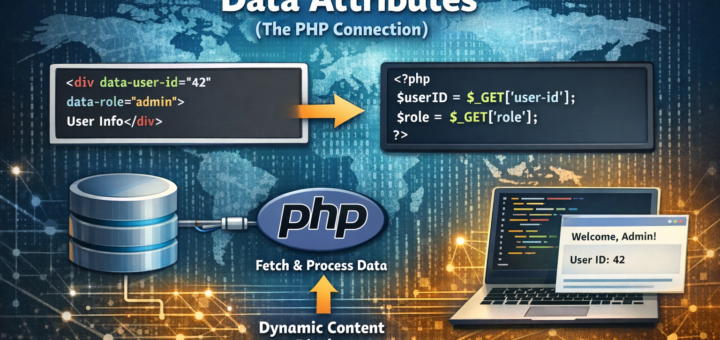
Data attributes allow us to create our own custom attributes on any HTML element. They always start with the prefix data- 1. Why do we need them? Imagine you are building a list of...
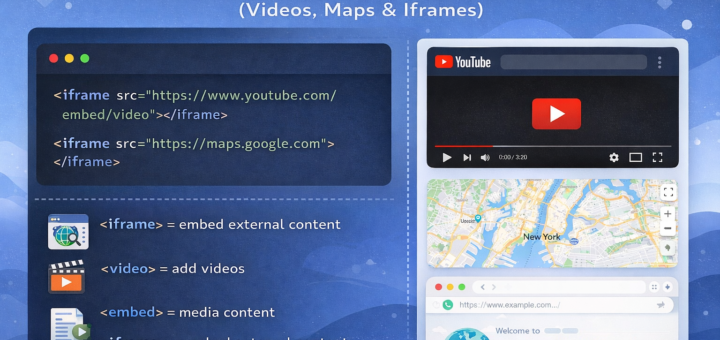
Sometimes, you don’t want to write everything out. Sometimes, a video tutorial or an interactive map is exactly what a “learner” needs. In HTML, we use Embed tags and Iframes to bring outside content...
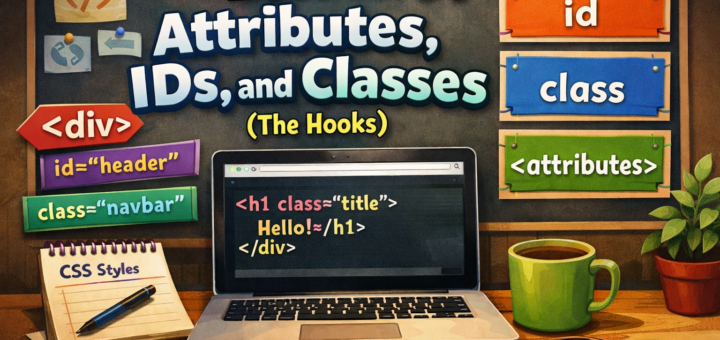
Attributes provide extra information about an HTML element. Some attributes are specific to certain tags (like src for images), while ID and Class can be used on almost any tag. 1. What is an...
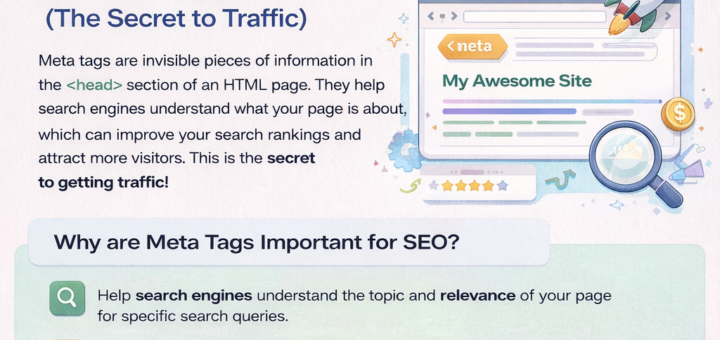
When you share a link on X (Twitter) or Facebook and it shows a nice image and a description, that isn’t magic—it’s Meta Tags. These tags live in the <head> and tell the rest...
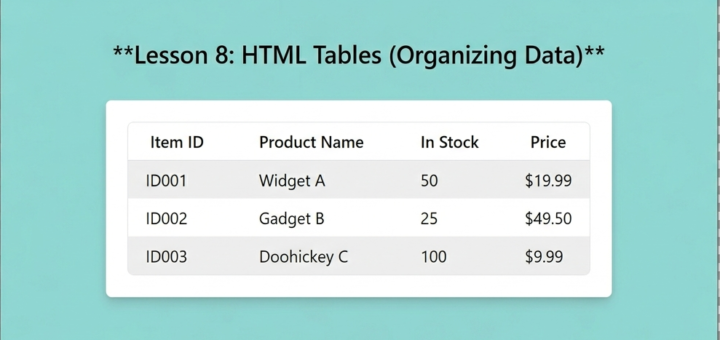
We’re wrapping up Phase 2! While many modern websites use “Flexbox” or “Grid” (which are CSS topics) for layout, HTML Tables are still the absolute best way to display structured data. An HTML table...
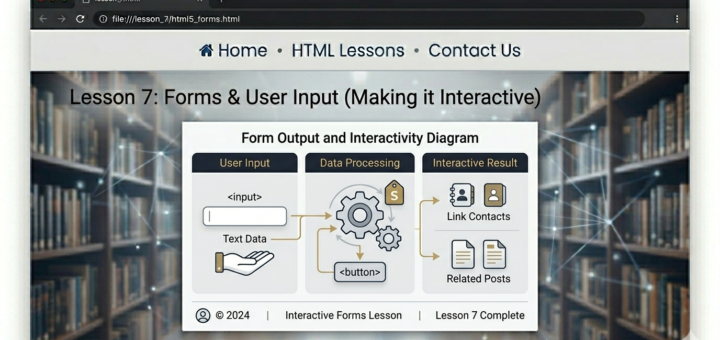
A form is a container for different types of input elements, like text boxes, checkboxes, and buttons. 1. The <form> Container The <form> tag wraps all your inputs. It has two critical attributes that...
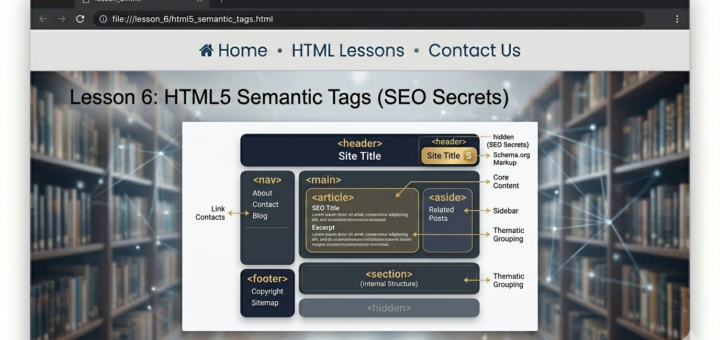
HTML5 Semantic Tags (SEO Secrets) “Semantic” is just a fancy word for “meaning.” A semantic tag tells both the browser and the search engine (Google) what its content is. 1. Why Semantics Matter for...
We are moving into Phase 2! Your website is currently full of text, but the modern web is visual. In this lesson, we’ll learn how to add images. A picture is worth a thousand...
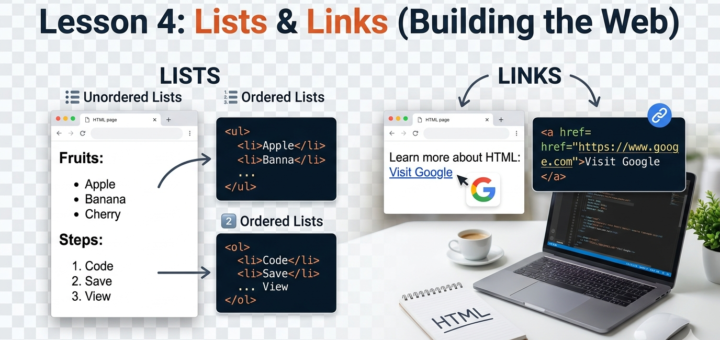
1. HTML Lists: Ordered vs. Unordered There are two main types of lists you will use in almost every tutorial. Unordered Lists (<ul>) Use these for bullet points where the order doesn’t strictly matter...